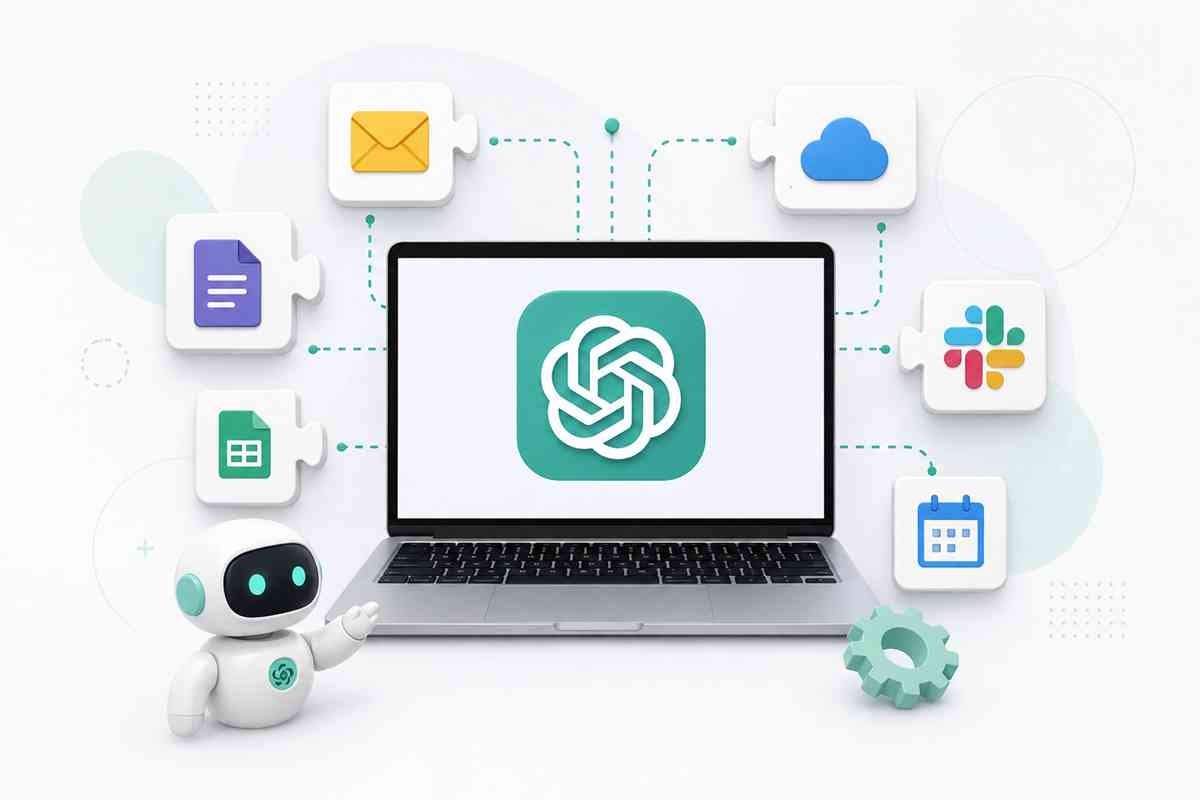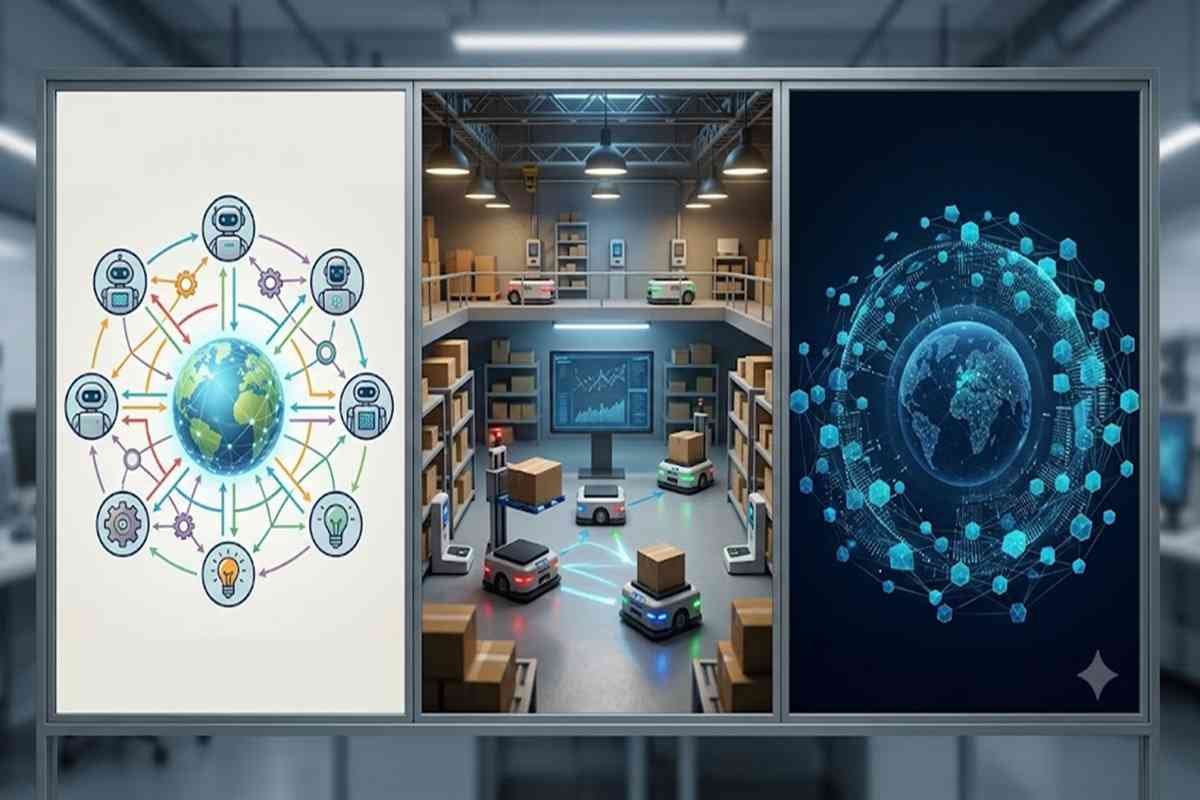
AI agents are intelligent software systems designed to perceive information, process it, make decisions and perform actions to achieve a specific objective. The way an AI agent makes decisions depends on its architecture, capabilities, available information and learning mechanism.
Some AI agents follow predefined rules. Others maintain information about their environment, work toward goals, compare different outcomes or learn from previous experiences.
Understanding the types of AI agents makes it easier to understand how modern artificial intelligence systems operate and where each type can be used.
What Are AI Agents?
An AI agent is a system that receives information from its environment, processes that information and takes an action based on a specific objective.
A simple software program normally follows instructions defined by a developer. An AI agent can evaluate a situation and select an appropriate action based on its programming, goals, available data and environment.
Modern AI agents can include several technologies:
- Artificial Intelligence
- Machine Learning
- Natural Language Processing (NLP)
- Large Language Models (LLMs)
- Memory systems
- Planning mechanisms
- External tools
- APIs
- Knowledge bases
- Feedback systems
A customer service AI agent is a simple example. It can receive a customer’s question, understand the request, retrieve relevant information and provide an answer.
The architecture behind the agent determines how much decision-making and independence it can handle.
What Are the Main Types of AI Agents?
AI agents are commonly classified according to their decision-making capabilities and how they interact with their environment.
The main types include:
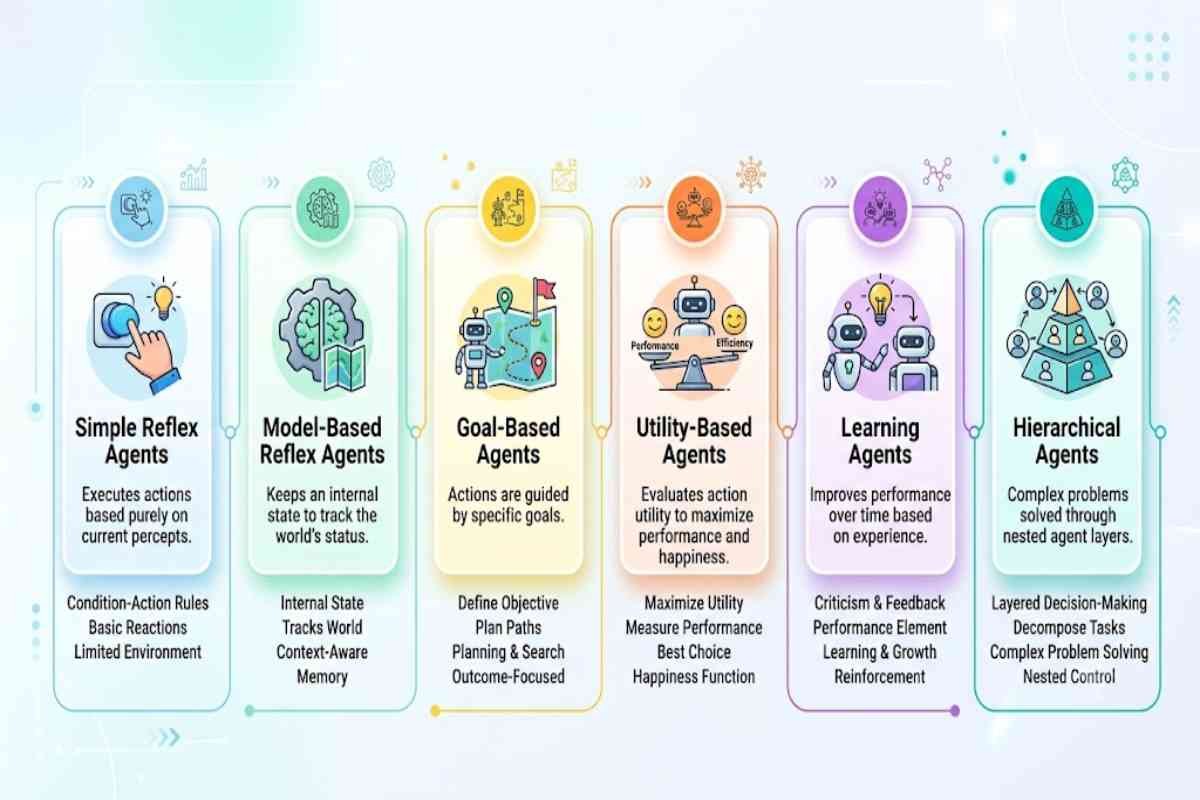
- Simple Reflex Agents
- Model-Based Reflex Agents
- Goal-Based Agents
- Utility-Based Agents
- Learning Agents
- Hybrid AI Agents
- Autonomous AI Agents
Each type serves a different purpose.
Also Read: How to Create AI Agents Step by Step ?
1. What Are Simple Reflex Agents?
Simple reflex agents are basic AI agents that respond to the current situation using predefined rules.
The decision process is straightforward:
Current Input → Rule → Action
The agent checks the information it receives and matches it with a predefined condition.
Example of a Simple Reflex Agent
An automatic air-conditioning system can work as a simple reflex system.
For example:
- Temperature above a defined level → Turn cooling on
- Temperature below a defined level → Turn cooling off
The system does not need to analyse a long history of temperature changes. It responds to the current condition.
Basic rule-based chatbots can follow a similar approach. A specific question or command can trigger a predefined response.
Key Characteristics
- Works with predefined rules
- Responds to current input
- Requires limited processing
- Does not normally maintain long-term memory
- Suitable for predictable environments
Simple reflex agents are useful for tasks where the possible situations and required responses are clearly defined.
2. What Are Model-Based Reflex Agents?
Model-based reflex agents maintain an internal representation of their environment.
A simple reflex agent looks at the current input. A model-based agent can use the current input along with information about previous states.
The decision process can be represented as:
Perception → Internal State → Decision → Action
The internal state gives the agent additional context.
Example of a Model-Based Agent
Consider a robot moving inside a building.
The robot may not be able to see every part of the building at the same time. It can maintain information about:
- Locations it has already visited
- Obstacles
- Previous movements
- Current position
- Environmental conditions
This information helps the robot make better decisions.
Model-based agents are useful in environments where the complete situation cannot be observed at one moment.
Key Characteristics
- Maintains an internal state
- Uses current and previous information
- Handles partially observable environments
- Provides more context than simple reflex agents
- Can support more complex decision-making
3. What Are Goal-Based AI Agents?
Goal-based agents are designed to achieve a particular objective.
The agent evaluates available actions and selects actions that can help reach its goal.
The process can be described as:
Current State → Possible Actions → Goal → Selected Action
A goal-based agent does not need to follow one fixed sequence of actions. It can consider different options based on the desired result.
Example of a Goal-Based Agent
A navigation system can have the goal of taking a user from one location to another.
The system can evaluate:
- Available roads
- Distance
- Traffic
- Route conditions
- Destination
The selected route is based on the goal of reaching the destination.
Goal-based AI agents can be used in:
- Navigation
- Robotics
- Game AI
- Scheduling
- Task planning
- Business automation
- Autonomous systems
Modern AI agents can use Large Language Models to understand a high-level objective and divide it into smaller tasks.
For example, an AI agent asked to create a competitor research report could identify competitors, collect information, analyse the findings and prepare the report.
4. What Are Utility-Based AI Agents?
Utility-based agents evaluate possible actions based on the quality or value of their expected outcomes.
A goal-based agent focuses on reaching a goal. A utility-based agent can compare several possible outcomes and select the option that offers the highest value.
Example of a Utility-Based Agent
A route-planning system may have three possible routes.
| Route | Travel Time | Cost | Traffic | Overall Value |
|---|---|---|---|---|
| Route A | 30 minutes | Low | High | Medium |
| Route B | 35 minutes | Medium | Low | High |
| Route C | 25 minutes | High | Medium | Medium |
The fastest route is not always the best route.
A utility-based agent can consider several factors before selecting an option.
These factors may include:
- Cost
- Time
- Risk
- Quality
- User preferences
- Resource usage
- Probability of success
- Performance
Utility-based decision-making is useful when a problem has multiple possible solutions and each option has different advantages and disadvantages.
5. What Are Learning Agents?
Learning agents improve their behaviour by using experience, data or feedback.
A learning agent does not depend entirely on fixed rules. Its performance can change as it receives more information.
A learning agent can include:
- Learning component
- Performance component
- Feedback mechanism
- Evaluation mechanism
The system performs an action and uses the result to improve future decisions.
Example of a Learning Agent
A recommendation system can learn from user behaviour.
It can analyse signals such as:
- Pages viewed
- Products selected
- Search queries
- Ratings
- Purchases
- Content preferences
The system can use these signals to improve future recommendations.
Learning agents are commonly associated with:
- Machine Learning
- Reinforcement Learning
- Recommendation systems
- Robotics
- Adaptive systems
- Autonomous applications
Learning capability is an important part of many modern AI systems.
6. What Are Hybrid AI Agents?
Hybrid AI agents combine multiple approaches within one system.
A hybrid agent may use rules, goals, machine learning, planning and language models in the same workflow.
An enterprise AI agent could use:
- Rules for security controls
- An LLM for language understanding
- Retrieval for accessing business information
- Planning for task decomposition
- APIs for external actions
- Human approval for sensitive operations
This architecture is useful when an AI system needs to handle different types of tasks.
Hybrid AI agents are becoming common in enterprise applications because businesses often need both flexibility and control.
7. What Are Autonomous AI Agents?
Autonomous AI agents can perform multiple actions with limited human intervention.
The user can provide a high-level objective. The agent can determine the steps required to complete the task.
For example:
User Goal: Research five competitors and create a comparison report.
The AI agent may decide to:
- Identify relevant competitors
- Search for company information
- Collect data
- Organise the information
- Compare competitors
- Prepare the report
- Review the output
The agent can use tools, APIs, databases and other software during the process.
The degree of autonomy depends on the system design, available tools, permissions and human oversight.
Autonomous AI agents are closely related to the concept of agentic AI.
How Do the Different Types of AI Agents Compare?
| AI Agent Type | Main Approach | Memory/State | Learning | Suitable For |
|---|---|---|---|---|
| Simple Reflex Agent | Uses predefined rules | Limited | No | Simple predictable tasks |
| Model-Based Reflex Agent | Uses current input and internal state | Yes | No | Partially observable environments |
| Goal-Based Agent | Works toward a defined goal | Yes | Not required | Planning and task completion |
| Utility-Based Agent | Selects the most valuable outcome | Yes | Not required | Optimisation and decision-making |
| Learning Agent | Improves using experience | Yes | Yes | Adaptive systems |
| Hybrid Agent | Combines multiple approaches | Yes | May include learning | Complex applications |
| Autonomous Agent | Performs multi-step tasks independently | Usually yes | May include learning | Advanced AI workflows |
How Are Modern AI Agents Different From Traditional AI Agent Types?
Classical AI agent categories provide a foundation for understanding intelligent systems.
Modern AI agents can combine several of these capabilities in one architecture.
An LLM-powered AI agent may be able to:
- Understand natural language
- Analyse context
- Create a task plan
- Retrieve information
- Use external tools
- Call APIs
- Execute actions
- Evaluate results
- Maintain memory
- Request human approval
This combination makes modern AI agents more capable than basic rule-based systems.
A single modern AI agent can display goal-based behaviour, use utility-based decisions, maintain memory and use learning or feedback mechanisms.
Also Read: How Does an AI Agent Work?
How Do LLMs Power Modern AI Agents?
Large Language Models have become an important component of many modern AI agents.
An LLM can provide the language understanding and reasoning layer of an agent.
A typical workflow can look like this:
User Request → LLM Understands Task → Agent Creates Plan → Tools Provide Information → Agent Takes Action → Result Is Evaluated
An AI agent can connect an LLM with:
- Search tools
- APIs
- Databases
- CRM systems
- Knowledge bases
- Code execution environments
- Business applications
This allows the system to perform tasks beyond simple text generation.
What Is the Difference Between AI Agents and Traditional Automation?
Traditional automation generally follows a fixed workflow.
Trigger → Step 1 → Step 2 → Step 3 → Result
An AI agent can operate with a more flexible process:
Goal → Observe → Decide → Plan → Act → Evaluate
Traditional automation is often the better choice for repetitive processes with predictable rules.
AI agents can be useful when a task involves changing information, natural language, multiple possible actions or dynamic decision-making.
The choice depends on the task. AI agents are not automatically the best solution for every automation problem.
How Can You Choose the Right Type of AI Agent?
The right type depends on the complexity of the task and the environment.
Choose Simple Reflex Agents When:
- Rules are clearly defined
- The environment is predictable
- Decisions are simple
- No learning is required
Choose Model-Based Agents When:
- Previous states matter
- The environment is partially observable
- The system needs internal state information
Choose Goal-Based Agents When:
- The system needs to achieve a specific objective
- Multiple actions are possible
- Task planning is required
Choose Utility-Based Agents When:
- Multiple outcomes are available
- Trade-offs need to be evaluated
- Cost, time or quality are important
Choose Learning Agents When:
- The system needs to improve with experience
- Historical data is available
- Feedback can influence future decisions
Choose Hybrid or Autonomous Agents When:
- Tasks contain multiple steps
- Different AI capabilities need to work together
- External tools or APIs are required
- The environment changes frequently
What Are the Challenges of AI Agents?
AI agents can handle complex tasks, but they also introduce new technical challenges.
Common concerns include:
- Incorrect decisions
- Hallucinated information
- Unpredictable actions
- Data privacy
- Security risks
- Prompt injection
- Excessive tool permissions
- High computational requirements
- Difficulties with agent evaluation
Businesses using autonomous AI systems need appropriate controls around permissions, monitoring, data access and human oversight.
What Is the Future of AI Agents?
AI agents are moving toward more capable systems that can handle complex tasks across different applications.
Important areas of development include:
- Multi-agent collaboration
- Long-term memory
- Advanced planning
- Tool use
- Real-time information retrieval
- Personalised decision-making
- Human-AI collaboration
- Agent evaluation
- AI security
- AI governance
Multi-agent systems are another important development area.
Instead of assigning an entire workflow to one AI agent, organisations can use specialised agents for different tasks.
For example:
Research Agent → Analysis Agent → Writing Agent → Review Agent
Each agent can have a specific role within the larger workflow.
Final Thoughts
The different types of AI agents represent different approaches to perception, decision-making, planning and learning.
Simple reflex agents work with predefined rules. Model-based agents maintain an internal state. Goal-based agents focus on objectives, while utility-based agents compare possible outcomes. Learning agents use experience and feedback to improve their performance.
Modern AI agents can combine several of these capabilities with Large Language Models, memory, planning, tool calling and external APIs.
This makes the traditional classification of AI agents a useful starting point for understanding modern agentic systems.

Related Posts