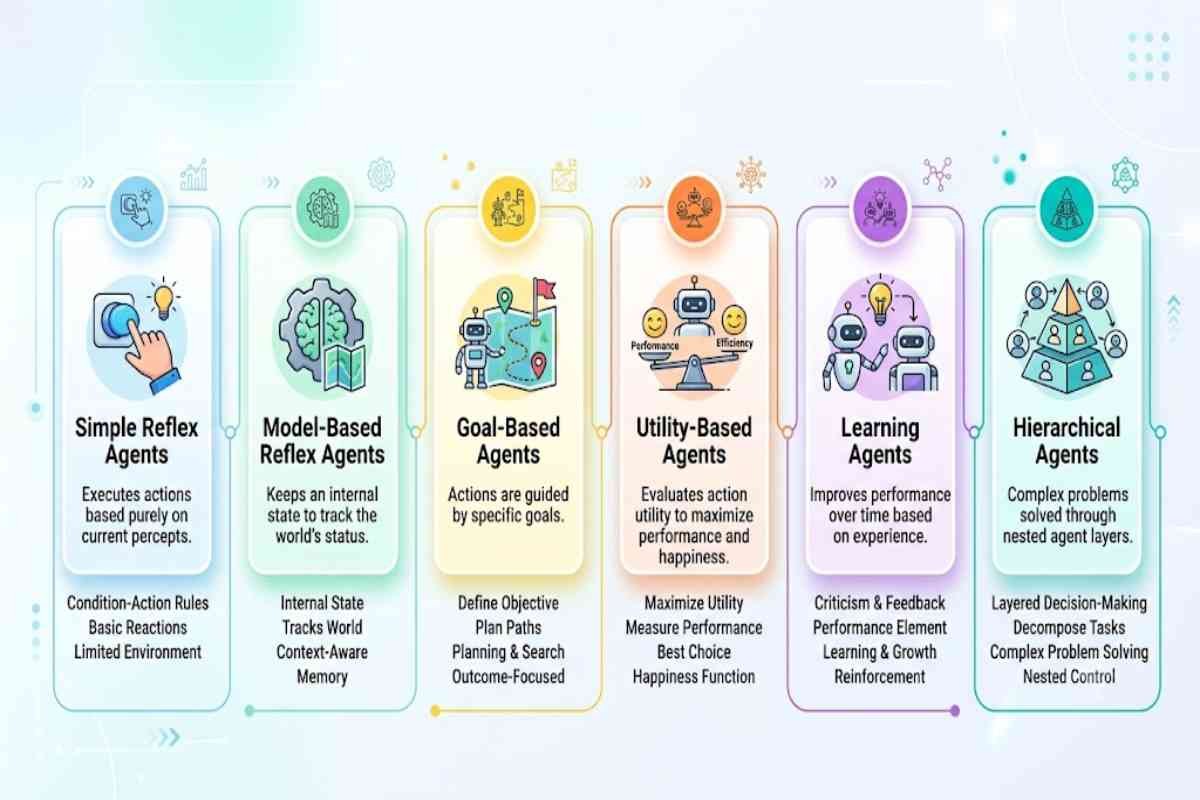
Artificial Intelligence is evolving rapidly, moving beyond simple chatbots and rule-based automation into a new era of intelligent AI agents. These systems can perceive information, reason through problems, make decisions, and execute tasks with minimal human intervention.
From virtual assistants and autonomous customer support systems to AI-powered business automation tools, AI agents are becoming a critical part of modern digital transformation. Understanding the core components of AI agents is essential for businesses, developers, researchers, and technology enthusiasts looking to leverage the next generation of AI solutions.
What Are AI Agents?
An AI agent is a software system that can perceive its environment, process information, make decisions, and take actions to achieve specific goals.
Unlike traditional software programs that follow predefined instructions, AI agents can:
- Learn from data
- Adapt to changing conditions
- Make autonomous decisions
- Interact with humans and systems
- Execute complex workflows
Examples include:
- Customer service AI assistants
- Autonomous coding agents
- Personal productivity agents
- AI research assistants
- Financial analysis agents
- Smart home automation systems
- Multi-agent AI ecosystems
The effectiveness of these systems depends on several interconnected components working together.
Why Understanding AI Agent Architecture Matters
As organizations increasingly adopt agentic AI systems, understanding their architecture helps:
| Benefit | Description |
|---|---|
| Better AI Design | Build scalable AI solutions |
| Improved Reliability | Reduce hallucinations and errors |
| Enhanced Automation | Streamline business workflows |
| Better User Experience | Deliver more accurate responses |
| Increased Efficiency | Automate repetitive tasks |
| Future Readiness | Prepare for next-generation AI technologies |
A well-designed AI agent relies on multiple layers that enable perception, reasoning, memory, planning, and action execution.
1. Perception Layer
The perception layer acts as the sensory system of an AI agent.
Its primary role is to collect and interpret information from the environment.
Functions of the Perception Layer
- Data collection
- Information extraction
- Context recognition
- User intent analysis
- Environmental awareness
Common Data Sources
- User prompts
- Voice commands
- Images
- Videos
- Documents
- APIs
- Databases
- Sensors
For example, when a user asks an AI assistant to summarize a report, the perception layer first analyzes the document and understands the request before any reasoning occurs.
2. Memory System
Memory is one of the most important components of advanced AI agents.
Without memory, an AI agent would treat every interaction as a completely new conversation.
Modern AI systems typically use two types of memory.
Short-Term Memory
Short-term memory stores information relevant to the current task.
Examples include:
- Conversation history
- Recent instructions
- Active workflows
- Temporary context
Long-Term Memory
Long-term memory stores information across sessions.
Examples include:
- User preferences
- Historical interactions
- Knowledge repositories
- Organizational data
Benefits of Memory
- Improved personalization
- Better contextual understanding
- Reduced repetition
- More accurate decision-making
- Enhanced task continuity
3. Reasoning Engine
The reasoning engine serves as the brain of an AI agent.
It processes information gathered from perception and memory to determine the best course of action.
Core Reasoning Capabilities
Logical Reasoning
Uses rules and structured thinking to solve problems.
Analytical Reasoning
Evaluates multiple variables before making decisions.
Probabilistic Reasoning
Handles uncertainty using statistical methods.
Causal Reasoning
Understands relationships between actions and outcomes.
For example, if a business AI agent identifies a decline in website traffic, it can analyze possible causes and recommend solutions.
4. Planning Module
Planning enables AI agents to break large objectives into manageable steps.
Rather than performing a single action, advanced agents create structured execution plans.
How Planning Works
- Understand the goal
- Analyze available resources
- Generate action sequences
- Prioritize tasks
- Execute strategically
Example
Goal: Create a content marketing strategy.
The AI agent may:
- Research competitors
- Analyze keywords
- Generate content ideas
- Build publishing schedules
- Track performance metrics
Benefits
- Improved efficiency
- Better task completion
- Reduced errors
- Higher automation success rates
5. Decision-Making System
Decision-making transforms analysis into action.
This component evaluates available options and selects the most suitable response.
Factors Considered
- Risk assessment
- Resource availability
- Confidence scores
- User preferences
- Business objectives
Decision-Making Techniques
- Rule-based systems
- Machine learning models
- Reinforcement learning
- Utility optimization
- Multi-criteria analysis
High-quality decision-making is essential for enterprise AI deployments where accuracy directly impacts business outcomes.
6. Tool Integration Layer
Modern AI agents rarely operate in isolation.
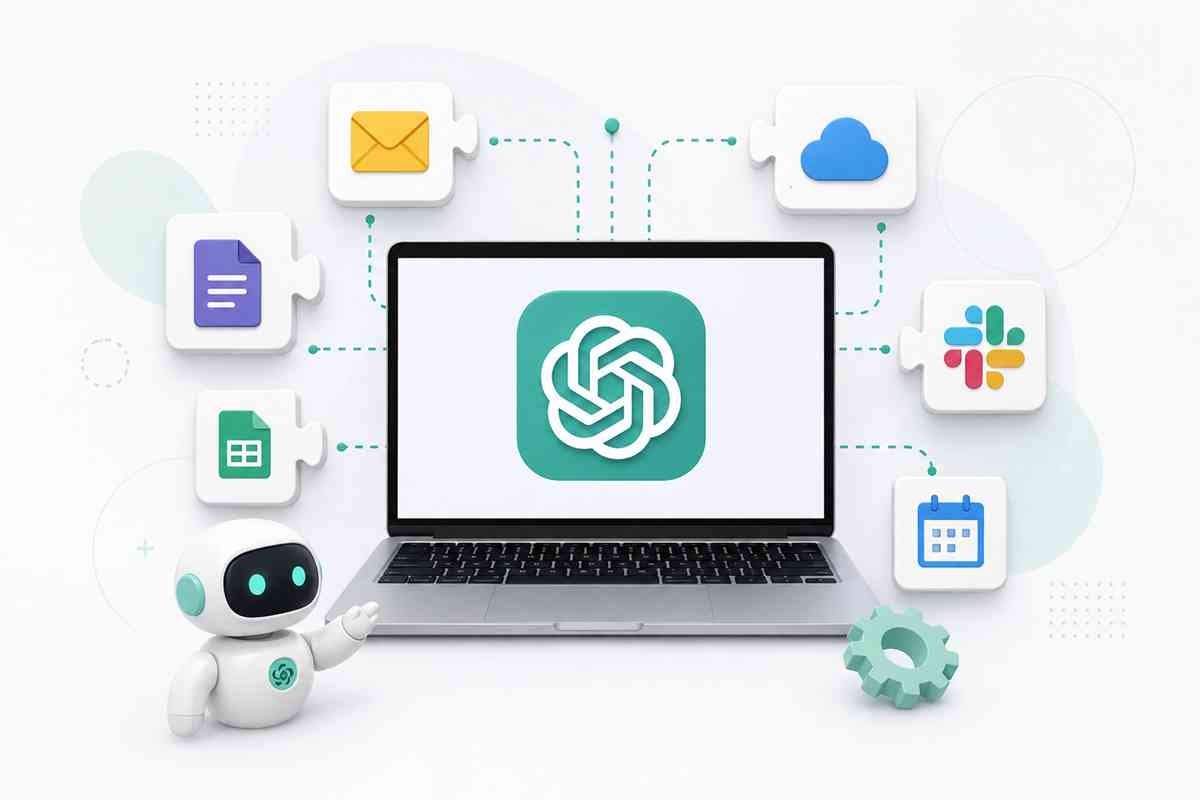
They interact with external tools and services to expand their capabilities.
Common Integrations
- Search engines
- CRM platforms
- Email systems
- Project management tools
- Databases
- Analytics software
- Cloud applications
For instance, an AI sales agent may access CRM records, send emails, schedule meetings, and update customer information automatically.
Importance
Tool integration transforms AI from a conversational system into a productivity platform.
7. Action Execution Module
The action module is responsible for carrying out tasks.
Once planning and decision-making are complete, actions are executed through this component.
Examples of Actions
- Sending emails
- Updating databases
- Creating reports
- Scheduling appointments
- Generating content
- Processing transactions
Characteristics
- Accuracy
- Reliability
- Speed
- Security
- Scalability
Without an effective execution layer, an AI agent remains purely analytical and cannot produce real-world outcomes.
8. Learning and Adaptation Layer
One of the defining characteristics of intelligent AI agents is their ability to improve over time.
Learning mechanisms allow agents to refine performance based on outcomes and feedback.
Learning Methods
Supervised Learning
Uses labeled training data.
Unsupervised Learning
Identifies patterns independently.
Reinforcement Learning
Improves through rewards and penalties.
Continuous Learning
Updates knowledge based on new information.
Benefits
- Better performance
- Increased accuracy
- Personalized experiences
- Adaptive behavior
9. Communication Interface
Communication enables AI agents to interact effectively with humans and other systems.
Communication Channels
- Text
- Voice
- Video
- APIs
- Multi-agent messaging
A strong communication layer improves user engagement and collaboration.
Key Features
- Natural language understanding
- Natural language generation
- Conversational AI
- Context-aware responses
- Multimodal interaction
10. Safety and Governance Framework
As AI agents become more autonomous, governance becomes increasingly important.
Safety mechanisms help ensure ethical and responsible AI behavior.
Governance Components
- Access control
- Permission management
- Audit logs
- Compliance monitoring
- Bias mitigation
- Data privacy protection
Why It Matters
Organizations need safeguards to:
- Prevent misuse
- Protect sensitive data
- Maintain regulatory compliance
- Ensure trustworthy AI operations
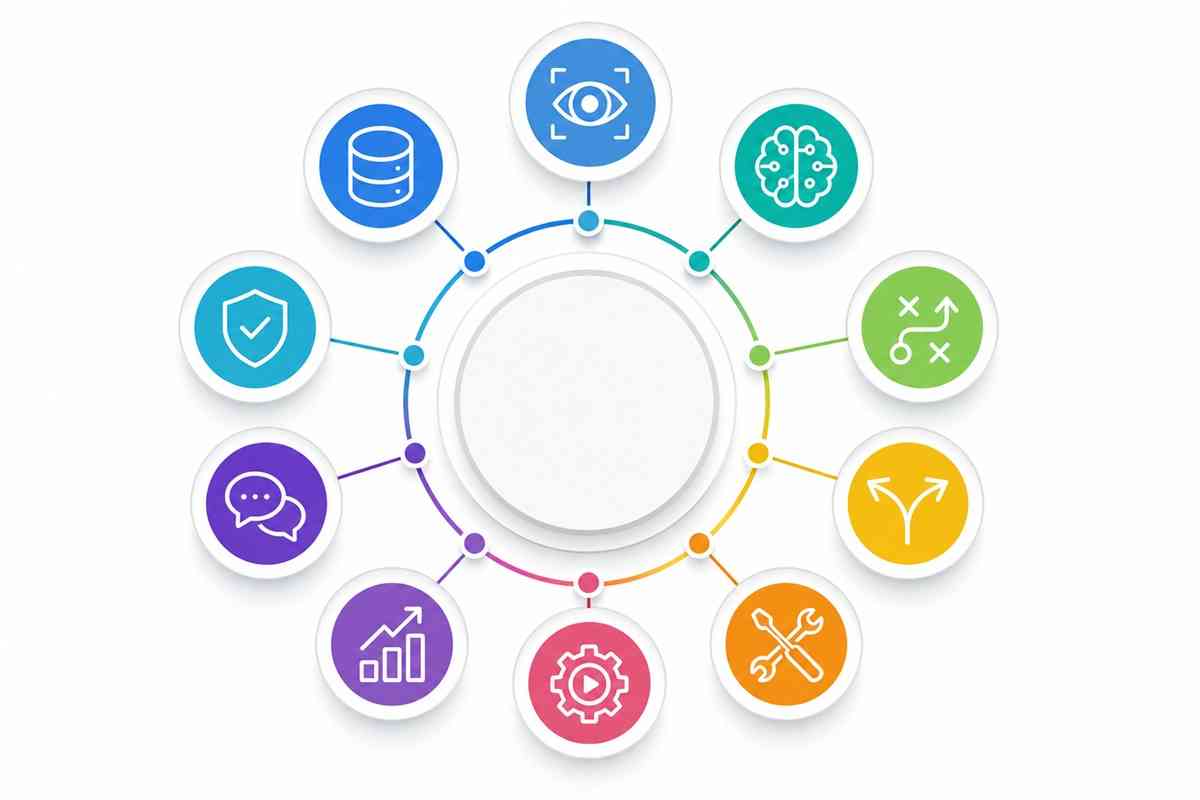
How These Components Work Together ?
The AI agent workflow typically follows this sequence:
- Perceive information
- Store context in memory
- Analyze using reasoning
- Generate a plan
- Make decisions
- Access tools if required
- Execute actions
- Learn from outcomes
- Communicate results
- Maintain safety controls
This interconnected architecture enables modern AI agents to perform complex tasks that previously required significant human involvement.
Also Read: How Does an AI Agent Work? Understanding the Technology Behind Intelligent AI Systems
Future of AI Agent Components
The next generation of AI agents will likely include:
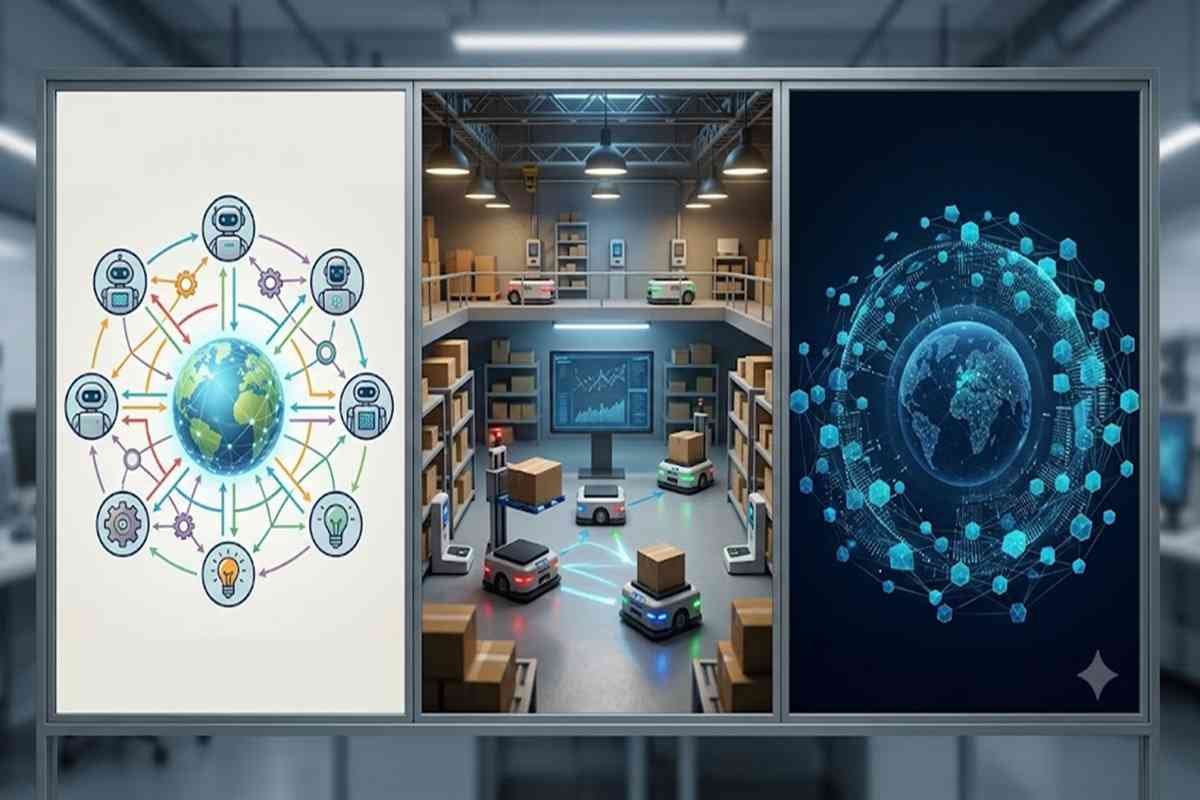
- Multi-agent collaboration
- Advanced memory architectures
- Real-time learning systems
- Autonomous workflow management
- Human-AI co-pilots
- Self-healing AI systems
- Cross-platform agent ecosystems
Industry experts predict that agentic AI will become a foundational technology for businesses, healthcare, finance, education, software development, and digital marketing.
Conclusion
The core components of AI agents form the foundation of intelligent autonomous systems. From perception and memory to reasoning, planning, decision-making, tool integration, execution, learning, communication, and governance, each component plays a crucial role in enabling AI agents to operate effectively.
As organizations increasingly adopt AI-powered automation, understanding these building blocks becomes essential for designing scalable, reliable, and trustworthy AI solutions.
Businesses that embrace advanced AI agent architectures today will be better positioned to leverage the future of intelligent automation, improve operational efficiency, and gain a competitive advantage in the rapidly evolving AI landscape.
FAQs
What are the main components of an AI agent?
The primary components include perception, memory, reasoning, planning, decision-making, tool integration, action execution, learning, communication, and governance.
Why is memory important in AI agents?
Memory allows AI agents to retain context, personalize interactions, and improve long-term performance.
What is the role of reasoning in AI agents?
Reasoning helps agents analyze information, solve problems, and make intelligent decisions.
How do AI agents use external tools?
AI agents connect to APIs, databases, software platforms, and search systems to perform real-world tasks.
What makes modern AI agents different from traditional chatbots?
Modern AI agents can plan, reason, learn, use tools, and execute tasks autonomously, while traditional chatbots mainly respond to predefined inputs.

Related Posts