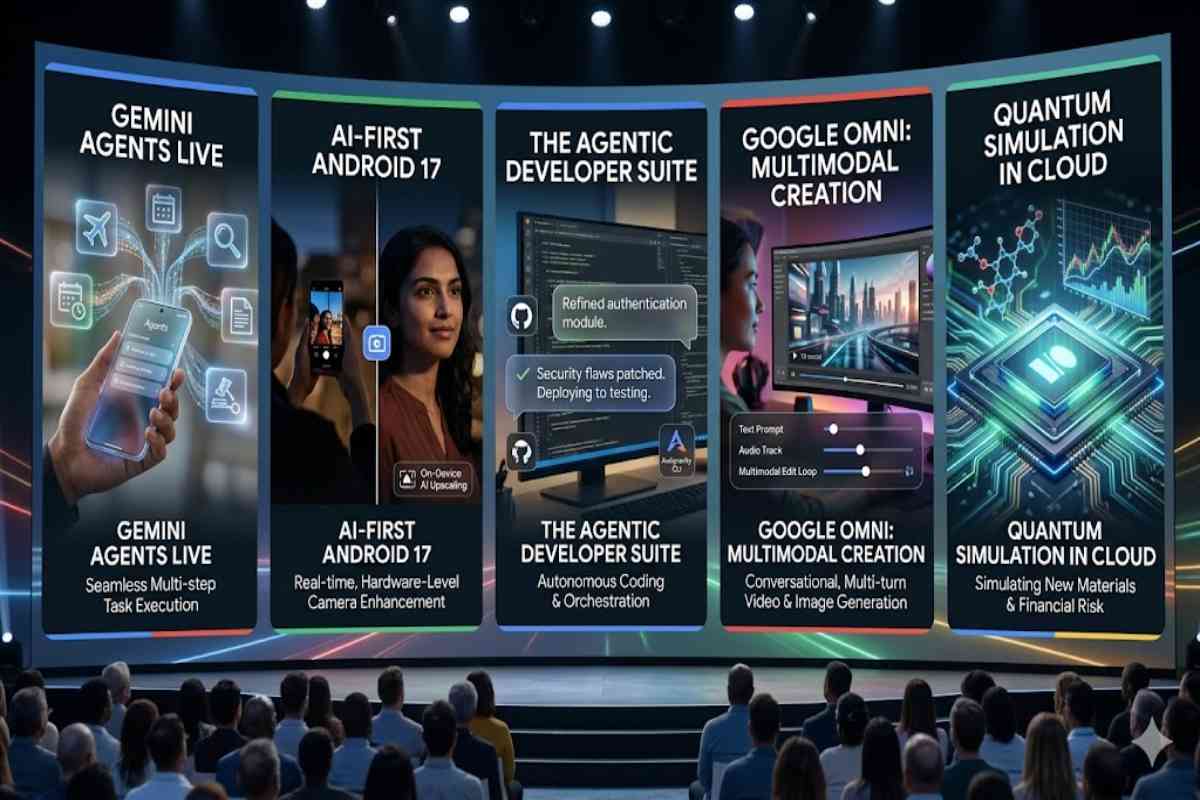
The google io 2026 event introduced Google’s most aggressive AI transformation yet. From Gemini 3.5 Flash and Gemini Omni to autonomous AI agents, AI-powered Search, and the new Google Antigravity ecosystem, the company shifted from traditional AI chatbots toward proactive digital assistants capable of handling real-world tasks automatically.
Google I/O 2026 Date and Event Overview
The official google i/o 2026 date was May 19–20, 2026.
This year’s keynote focused almost entirely on artificial intelligence, autonomous workflows, multimodal AI, and intelligent agent ecosystems.
Unlike previous developer-focused events, the google i/o 2026 keynote emphasized AI systems capable of:
- Running continuously in the background
- Completing multi-step tasks autonomously
- Building and deploying applications
- Managing digital workflows
- Acting proactively instead of reactively
The event demonstrated how Google plans to integrate AI deeply into Search, Chrome, Android, Workspace, YouTube, and cloud platforms.
Gemini 3.5 Flash Became the Backbone of Google’s AI Ecosystem
The launch of gemini 3.5 flash was one of the biggest highlights of the conference.
Google designed the model specifically for agentic workflows where AI systems repeatedly make tool calls, analyze information, and complete complex chains of actions.
Why Gemini 3.5 Flash Matters ?
1. Faster AI Performance
Google stated the model is nearly four times faster than earlier frontier AI systems.
2. Built for Multi-Step Agents
The model excels at executing long chains of tasks without slowing down.
3. Strong Coding Capabilities
Gemini 3.5 Flash supports high-speed coding, debugging, and automated engineering workflows.
4. Better Parallel Processing
It can manage multiple AI actions simultaneously.
5. Reduced Latency
Fast responses make background automation feel seamless.
6. Improved Enterprise Workflows
Businesses can automate repetitive operations more efficiently.
7. Enhanced Tool Calling
The model integrates deeply with APIs and software tools.
8. Better Real-Time Reasoning
It analyzes large contexts quickly while maintaining response accuracy.
9. Strong Multimodal Understanding
The model processes text, images, audio, and video together.
10. Foundation for Future AI Products
Google confirmed that Gemini 3.5 Flash powers most of its 2026 AI ecosystem.
Gemini Omni and Google Omni Redefined AI Video Creation
Another major announcement was gemini omni, also referred to as google omni in developer discussions.
This multimodal AI model combines text, image, audio, and video understanding into one system capable of generating cinematic video outputs.
Key Features of Gemini Omni
| Feature | Capability |
|---|---|
| Video Generation | Creates cinematic AI videos |
| Conversational Editing | Edit scenes through prompts |
| AI Avatars | Generates voice-matched avatars |
| Multimodal Inputs | Accepts text, images, and audio |
| Realistic Physics | Improved gravity and motion understanding |
| Character Consistency | Maintains visual identity across scenes |
Unlike older video generators, Gemini Omni supports continuous editing conversations.
Users can simply ask the AI to:
- Change lighting
- Replace backgrounds
- Add cinematic zoom effects
- Modify scenes
- Update characters
- Adjust visual styles
Google I/O 2026 AI Search Became More Agentic
The new google i/o 2026 ai search experience completely changed how Search operates.
Also Read: What is the primary purpose of business monitoring in agentic ai systems?
Instead of acting like a traditional search engine, AI Search now functions more like a digital assistant capable of taking actions.
Also Read: What Is the Primary Function of a Planner Agent Within Agentic AI Systems?
Biggest Changes in AI Search
1. AI Mode
Users can interact conversationally with Search.
2. Multi-Step Actions
Search can execute tasks instead of only showing links.
3. Background Agents
Persistent AI agents monitor topics continuously.
4. Universal Cart
Search now supports intelligent shopping workflows.
5. Generative UI
Google dynamically creates custom interfaces depending on user intent.
6. Multimodal Search
Users can search using videos, tabs, files, and images.
7. Real-Time Monitoring
AI agents watch updates across websites automatically.
8. Personalized Results
Search integrates Gmail, Photos, and Calendar data securely.
9. Interactive Layouts
Search dynamically renders dashboards and trackers.
10. Continuous Task Management
AI Search handles ongoing projects over time.
Universal Cart Quietly Became One of Google’s Biggest Commerce Plays
Universal Cart was one of the most strategic launches from the keynote.
Instead of shopping independently across websites, users can now centralize purchases through Google’s AI ecosystem.
How Universal Cart Works
- Add products from websites
- Include YouTube recommendations
- Pull items from Gmail receipts
- Compare cross-platform pricing
- Monitor discounts automatically
- Receive stock notifications
- Execute checkout centrally
The system operates using Google’s Universal Commerce Protocol.
This could significantly impact online shopping behavior and e-commerce ecosystems.
Gemini Spark Introduced 24/7 AI Automation
The launch of google spark and gemini spark showcased Google’s long-term AI assistant vision.
Unlike normal chatbots, Spark operates continuously in the background.
What Gemini Spark Can Do ?
1. Organize Daily Workflows
Spark manages schedules, reminders, and recurring tasks.
2. Run Administrative Processes
It automates repetitive digital operations.
3. Connect Enterprise Platforms
Spark integrates with tools like SharePoint and ServiceNow.
4. Generate Daily Briefings
Daily Brief summarizes schedules, emails, and priorities.
5. Background Monitoring
The AI proactively watches ongoing tasks.
6. Human Approval Protection
Sensitive actions require user confirmation.
7. Enterprise Security
Google runs Spark inside isolated cloud environments.
8. Multi-Step Execution
Spark handles complex automation chains autonomously.
9. Personalized Intelligence
The assistant learns user preferences over time.
10. Continuous Operation
Spark keeps running even when devices are inactive.
Google Antigravity 2.0 Became the Biggest Developer Announcement
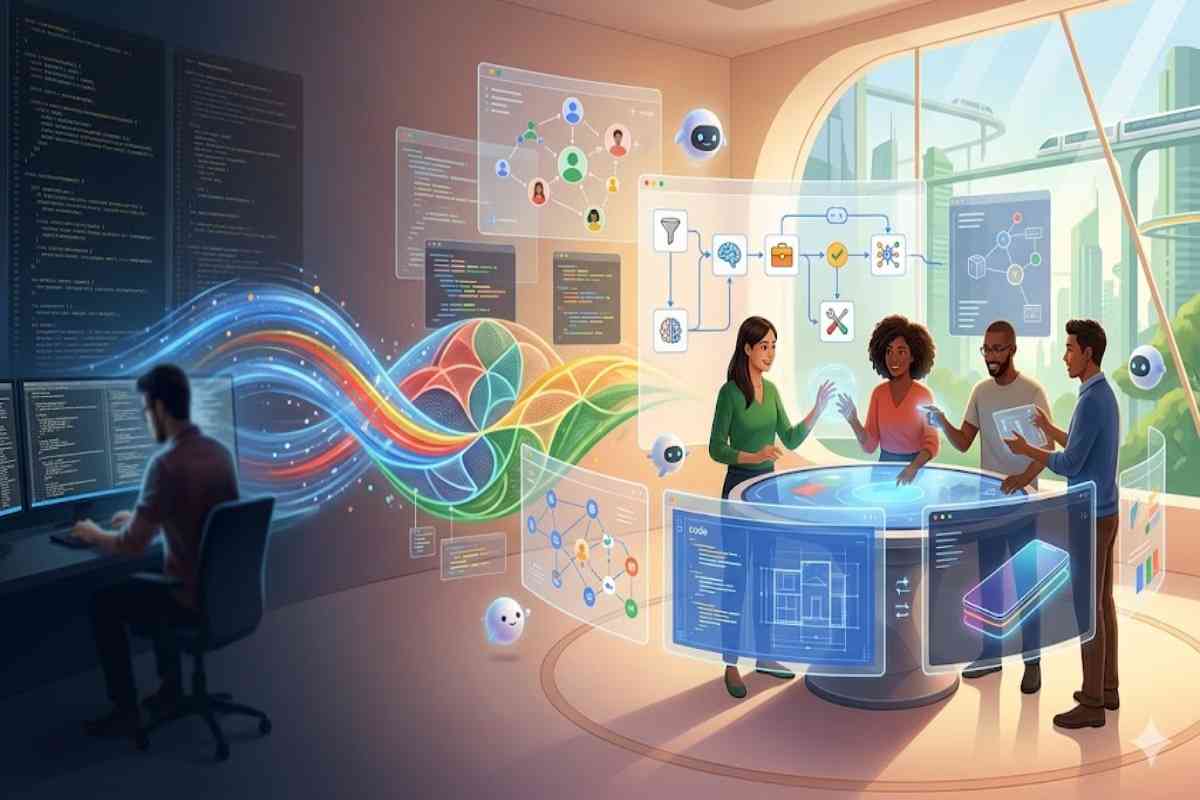
Google transformed Antigravity from an AI coding assistant into a complete AI engineering platform.
Major Features of Antigravity 2.0
1. Standalone Desktop Application
Developers now manage AI agents from a dedicated platform.
2. Multi-Agent Orchestration
Several AI agents can collaborate simultaneously.
3. Review-Driven Development
AI requests permission before major deployments.
4. Automated Background Engineering
Scheduled coding workflows run autonomously.
5. Terminal-Based CLI
Developers can use Antigravity through command-line environments.
6. SDK Access
Businesses can integrate custom AI agents.
7. AGENTS.md Support
Plain-English engineering rules guide AI sub-agents.
8. Enterprise Integration
Antigravity connects directly with Google Cloud projects.
9. Parallel Coding Tasks
AI agents divide engineering workloads automatically.
10. Unified AI Development Ecosystem
Google wants Antigravity to replace fragmented AI coding workflows.
Google AI Studio Evolved Beyond Prompting
The upgraded google ai studio focused on rapid AI-powered application development.
New Google AI Studio Capabilities
- Build Android apps using prompts
- Export projects to Antigravity
- Connect directly with GitHub
- Integrate Workspace APIs
- Prototype mobile apps quickly
- Use Android emulators in browsers
- Deploy applications faster
- Build AI-powered dashboards
This transforms AI Studio into a serious development platform rather than a simple testing environment.
GitHub and AI Development Became More Integrated
The keynote also highlighted deeper github integrations.
Google’s ecosystem now supports:
- Direct repository workflows
- Version control integration
- AI-assisted engineering
- Collaborative coding agents
- Repository-wide automation
- Context-aware AI development
The integration reduces manual coordination during software development.
Hidden Features from Google I/O 2026 That Most People Missed
Beyond headline announcements, Google revealed several deep-tech innovations.
10 Hidden Innovations from Google I/O 2026
1. WebMCP Standard
A proposed open standard allowing websites to expose actions directly to AI agents.
2. Chrome Auto Browse
Chrome can proactively complete related online tasks automatically.
3. Skills in Chrome
Users can save advanced prompts as reusable automation shortcuts.
4. Nano Banana
An on-device AI image transformation system.
5. Android Migration Agent
AI converts iOS and React Native apps into native Android code.
6. HTML-in-Canvas API
Searchable 3D web content becomes easier for Google crawlers to index.
7. Android Bench Leaderboard
Google introduced open-source AI benchmarking tools.
8. Persistent Information Agents
Search agents continuously monitor niche topics.
9. SynthID Expansion
AI watermarking became more deeply integrated across browsers and media.
10. Ephemeral Linux Sandboxes
Google improved enterprise privacy using temporary virtual environments.
Google Flow Expanded AI Creativity Tools
The upgraded google flow platform targeted creators and creative professionals.
Google Flow Features
| Feature | Purpose |
|---|---|
| AI Video Editing | Conversational editing |
| Multi-Step Creative Agents | Workflow automation |
| Music Video Creation | AI-assisted music generation |
| Character Consistency | Stable visual identities |
| Batch Editing | Large-scale content adjustments |
| Custom AI Tools | User-built creative utilities |
Google Flow now functions more like a complete AI creative studio.
Android XR and Audio Glasses Pointed Toward Ambient Computing
Google and Samsung introduced lightweight audio-based smart glasses.
Unlike traditional AR headsets, these glasses focus on:
- Real-time voice assistance
- Audio navigation
- Spatial translations
- Contextual awareness
- Ambient AI interactions
The move suggests Google may prioritize invisible computing experiences over bulky augmented reality hardware.
Why Google I/O 2026 Was a Strategic Turning Point ?
The biggest takeaway from the event was not a single product.
Instead, Google revealed a fully connected AI ecosystem where:
- Search becomes proactive
- AI agents run continuously
- Development becomes autonomous
- Browsers complete tasks automatically
- Shopping workflows centralize
- Creative tools become conversational
- Operating systems integrate AI deeply
This marks a major shift away from isolated AI chatbots toward agent-driven computing.
Future Impact of Google’s AI Ecosystem
The technologies announced during google io 2026 may reshape several industries.
Industries Most Likely to Change
- Software development
- Digital marketing
- E-commerce
- SaaS platforms
- Search optimization
- Content creation
- Enterprise automation
- Customer support
- Productivity software
Many analysts believe Google’s deep AI integration could reduce demand for standalone AI utilities and workflow tools.
FAQs
1. What was the official Google I/O 2026 date?
Google I/O 2026 took place from May 19 to May 20, 2026.
2. What is Gemini 3.5 Flash?
Gemini 3.5 Flash is Google’s advanced AI model optimized for fast agentic workflows and automation.
3. What is Gemini Omni?
Gemini Omni is Google’s multimodal AI system capable of generating and editing cinematic AI videos conversationally.
4. What is Google Spark?
Google Spark is a proactive AI assistant that automates workflows and background digital tasks continuously.
5. What is Google Antigravity 2.0?
Antigravity 2.0 is Google’s AI development platform for orchestrating multiple coding agents and automation workflows.
6. How does Universal Cart work?
Universal Cart centralizes shopping across websites, YouTube, Gmail, and Search into one AI-powered checkout system.
7. What is WebMCP?
WebMCP is Google’s proposed open web standard allowing AI agents to interact directly with website functions.
8. What is the Google AI Ultra subscription?
Google AI Ultra is a $100/month premium subscription offering higher AI usage limits and enterprise capabilities.
Conclusion
The Google i/o 2026 highlights demonstrated that Google is moving aggressively toward autonomous AI ecosystems powered by agents, multimodal models, and proactive computing experiences.
From Gemini spark and Gemini omni to Google ai studio, Google flow, and intelligent AI Search, the event revealed Google’s long-term vision for deeply integrated AI systems that work continuously in the background to assist users, developers, and enterprises.

Related Posts