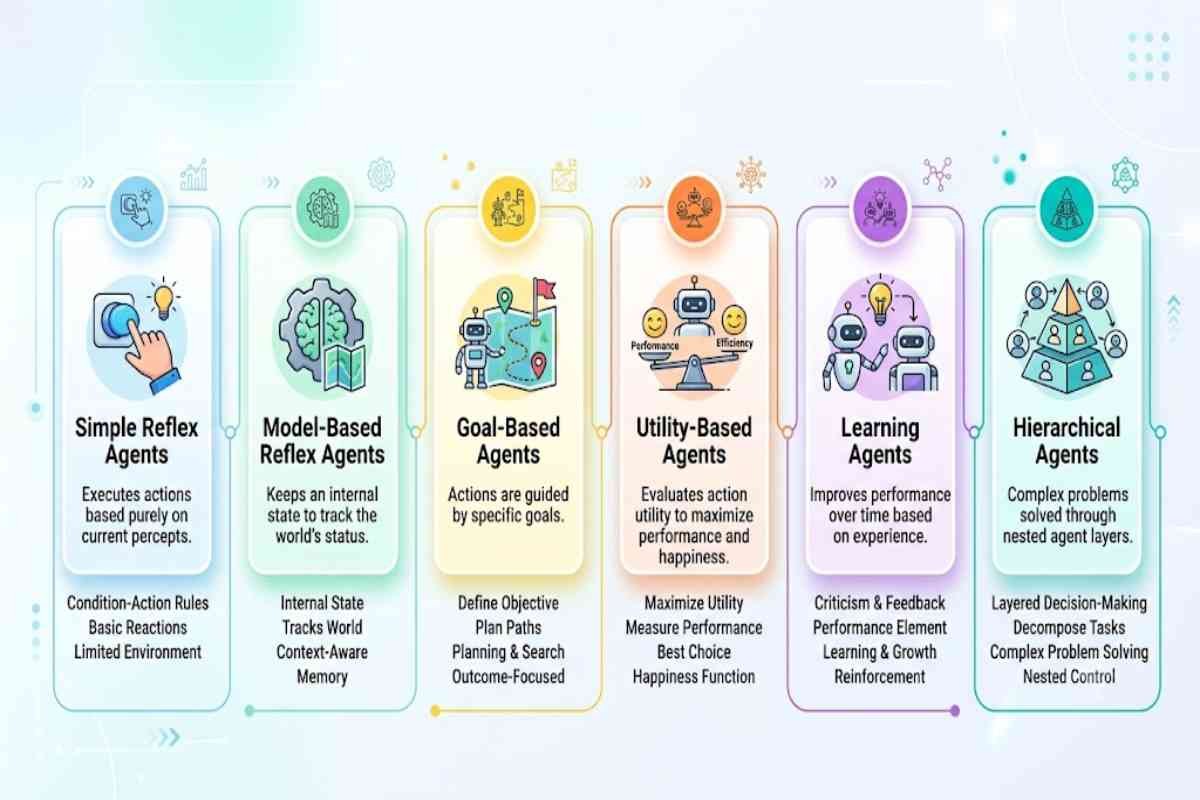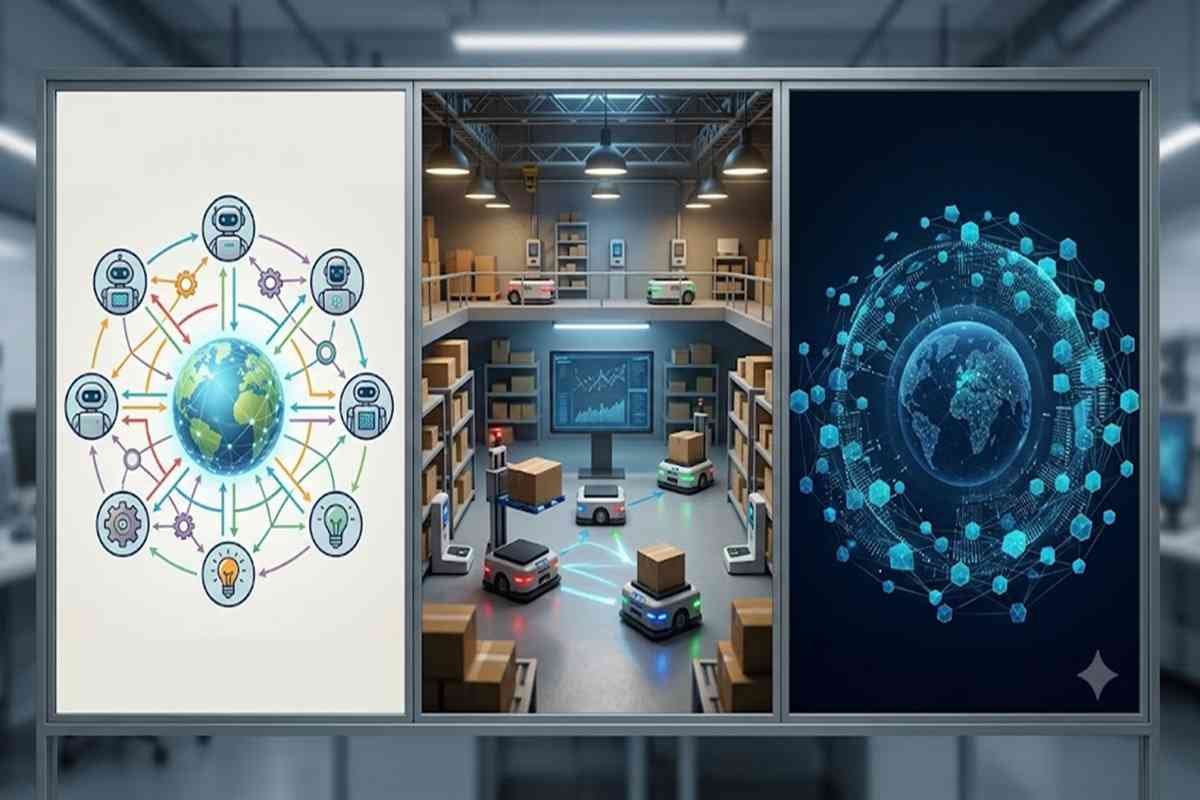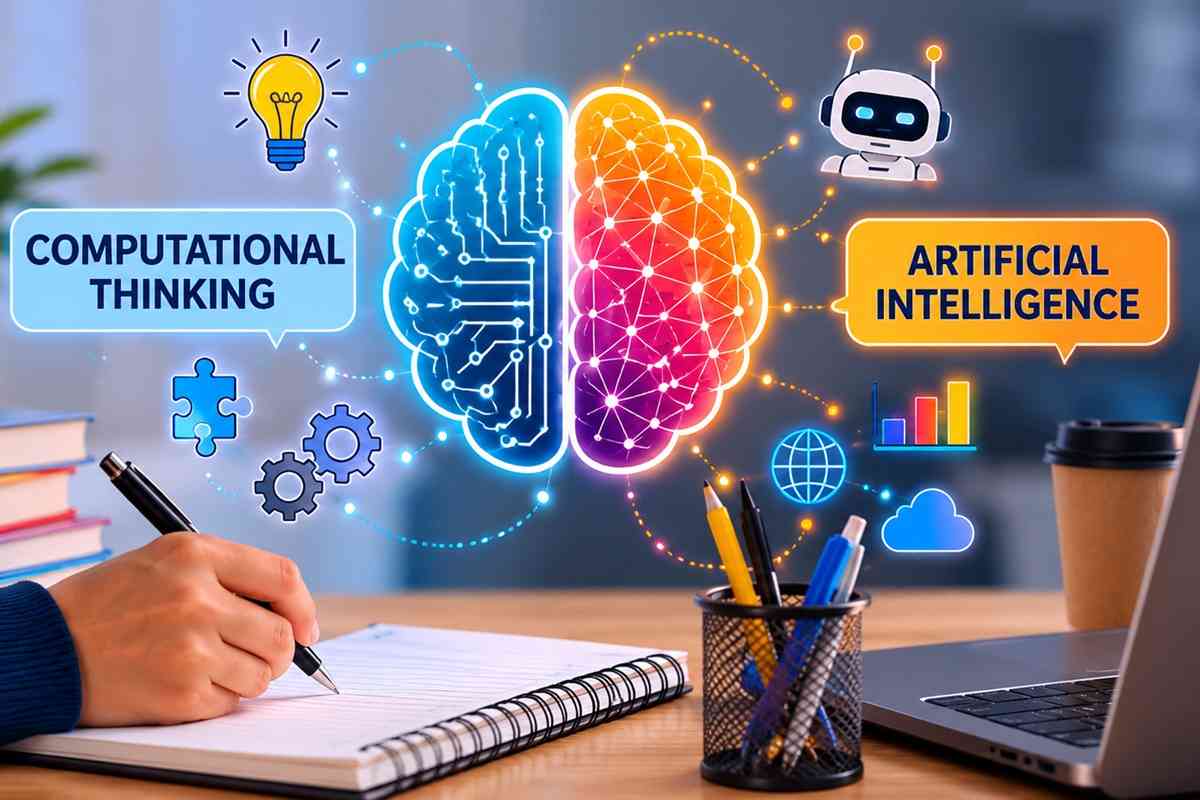
Computational thinking and artificial intelligence are two important concepts shaping the future of technology, education, and innovation. Computational thinking helps solve complex problems through logical reasoning, while artificial intelligence enables machines to learn, analyze data, and make decisions. Together, they form the foundation of modern digital transformation across industries.
What Is Computational Thinking?
Computational thinking is a problem-solving approach that breaks down complex problems into smaller, manageable parts. It helps people develop logical solutions that computers can understand and execute.
Computational thinking is not limited to computer science. It is used in education, business, engineering, healthcare, and everyday decision-making.
Key Components of Computational Thinking
- Decomposition
- Pattern Recognition
- Abstraction
- Algorithm Design
These four pillars help individuals solve problems systematically and efficiently.
What Is Artificial Intelligence?
Artificial intelligence (AI) is a branch of computer science that enables machines to perform tasks that typically require human intelligence.
AI systems can:
- Learn from data
- Recognize patterns
- Understand language
- Make predictions
- Solve problems
- Automate tasks
Artificial intelligence powers technologies such as virtual assistants, recommendation systems, self-driving vehicles, and intelligent chatbots.
Why Are Computational Thinking and Artificial Intelligence Important?
Computational thinking provides the framework for problem-solving, while artificial intelligence applies those solutions using technology.
Together they help:
- Improve decision-making
- Automate repetitive tasks
- Analyze large datasets
- Increase efficiency
- Solve real-world challenges
- Drive innovation
As technology advances, these skills are becoming increasingly valuable across industries.
10 Key Elements of Computational Thinking and Artificial Intelligence
1. Problem Decomposition
Problem decomposition involves breaking large problems into smaller and more manageable tasks.
For example, building a mobile app requires separate planning for design, coding, testing, and deployment.
This approach simplifies problem-solving and improves project management.
2. Pattern Recognition
Pattern recognition helps identify similarities, trends, and recurring behaviors within data.
Artificial intelligence uses pattern recognition for:
- Image recognition
- Fraud detection
- Customer behavior analysis
- Medical diagnosis
Recognizing patterns improves prediction accuracy and decision-making.
3. Abstraction
Abstraction focuses on important information while ignoring unnecessary details.
This helps developers and AI systems process data more efficiently and create practical solutions.
Abstraction is widely used in software development and machine learning models.
Also Read: What is the primary purpose of business monitoring in agentic ai systems?
4. Algorithm Design
Algorithms are step-by-step instructions used to solve problems.
Computational thinking relies heavily on algorithm design to create logical and repeatable solutions.
Artificial intelligence uses algorithms for:
- Search engines
- Recommendation systems
- Data analysis
- Predictive modeling
5. Data Analysis
Artificial intelligence depends on data to learn and improve.
Computational thinking helps organize and interpret data effectively before AI systems process it.
Data analysis supports:
- Business intelligence
- Healthcare research
- Financial forecasting
- Marketing optimization
6. Machine Learning
Machine learning is a subset of artificial intelligence that allows systems to learn from data without explicit programming.
Applications include:
- Spam detection
- Voice recognition
- Personalized recommendations
- Predictive analytics
Machine learning has become a major driver of AI innovation.
7. Automation
Automation allows machines to perform repetitive tasks with minimal human intervention.
Examples include:
- Customer support chatbots
- Automated reporting
- Manufacturing robots
- Smart scheduling systems
Automation improves productivity and operational efficiency.
8. Logical Reasoning
Logical reasoning is a core component of computational thinking.
It helps individuals:
- Evaluate options
- Solve problems systematically
- Make informed decisions
- Develop effective algorithms
Strong logical reasoning skills support both programming and AI development.
9. Predictive Modeling
Predictive models use historical data to forecast future outcomes.
Artificial intelligence applies predictive modeling in:
- Healthcare diagnostics
- Stock market analysis
- Weather forecasting
- Customer behavior prediction
Accurate predictions help organizations make strategic decisions.
10. Continuous Learning
Modern AI systems continuously improve through new data and feedback.
Computational thinking supports this process by refining algorithms and improving solution accuracy over time.
Continuous learning is essential for developing intelligent systems that adapt to changing environments.
Comparison Between Computational Thinking and Artificial Intelligence
| Feature | Computational Thinking | Artificial Intelligence |
|---|---|---|
| Purpose | Problem-solving approach | Machine intelligence |
| Focus | Logical thinking | Learning and decision-making |
| Human Involvement | High | Variable |
| Application | Problem analysis | Task automation |
| Foundation | Algorithms and logic | Data and machine learning |
| Goal | Create solutions | Execute intelligent actions |
Both concepts complement each other and are often used together in technology development.
How Computational Thinking Supports Artificial Intelligence
Computational thinking provides the structured framework required to build AI systems.
Ways Computational Thinking Helps AI
1. Defines Problems Clearly
AI solutions become more effective when problems are properly identified and analyzed.
2. Creates Efficient Algorithms
Computational thinking helps developers design algorithms that power AI systems.
3. Improves Data Processing
Organized data structures improve machine learning performance.
4. Supports Model Development
AI models require logical workflows that originate from computational thinking principles.
5. Enhances Decision-Making
Better problem-solving frameworks produce more accurate AI outcomes.
Real-World Applications of Computational Thinking and Artificial Intelligence
These technologies are transforming nearly every industry.
Popular Applications
- Virtual assistants
- Self-driving cars
- Healthcare diagnostics
- Smart cities
- E-commerce recommendations
- Cybersecurity systems
- Financial fraud detection
Businesses increasingly rely on AI-powered solutions developed through computational thinking methodologies.
Benefits of Computational Thinking and Artificial Intelligence
Organizations and individuals gain numerous advantages from these technologies.
Key Benefits
- Faster problem-solving
- Improved productivity
- Better decision-making
- Enhanced innovation
- Data-driven insights
- Reduced operational costs
- Increased automation
These benefits explain why computational thinking and artificial intelligence are becoming essential skills.
Challenges of Computational Thinking and Artificial Intelligence
Despite their advantages, there are challenges to consider.
Common Challenges
- Data privacy concerns
- Algorithm bias
- High implementation costs
- Complex technical requirements
- Security risks
- Ethical considerations
- Skill shortages
Organizations must address these challenges to maximize AI benefits responsibly.
Skills Required for Computational Thinking and Artificial Intelligence
Professionals working in these fields need a combination of technical and analytical skills.
Important Skills
- Problem-solving
- Critical thinking
- Programming
- Data analysis
- Mathematics
- Machine learning
- Communication
- Logical reasoning
Continuous learning is essential because technology evolves rapidly.
Future of Computational Thinking and Artificial Intelligence
The future of computational thinking and artificial intelligence looks extremely promising.
Emerging Trends
- Generative AI
- Autonomous systems
- AI-powered education
- Smart healthcare solutions
- Advanced robotics
- Personalized learning systems
- Intelligent business automation
As artificial intelligence continues to evolve, computational thinking will remain the foundation for designing innovative and effective solutions.
Also Read: How Generative AI Can Help Managers ?
Conclusion
Computational thinking and artificial intelligence are closely connected technologies driving modern innovation. Computational thinking provides structured problem-solving methods, while artificial intelligence applies those methods to create intelligent systems capable of learning and decision-making.
As industries increasingly adopt AI technologies, understanding computational thinking and artificial intelligence will become a valuable skill for students, professionals, and businesses alike.
FAQs
1. What is computational thinking?
Computational thinking is a problem-solving method that uses decomposition, pattern recognition, abstraction, and algorithms to solve complex challenges.
2. What is artificial intelligence?
Artificial intelligence is technology that enables machines to perform tasks requiring human-like learning, reasoning, and decision-making.
3. How are computational thinking and artificial intelligence related?
Computational thinking helps design logical solutions, while artificial intelligence uses those solutions to create intelligent systems.
4. Why is computational thinking important?
It improves problem-solving skills, logical reasoning, and the ability to create efficient solutions for complex problems.
5. What are examples of artificial intelligence?
Virtual assistants, recommendation systems, self-driving vehicles, chatbots, and fraud detection systems are common AI applications.
6. Can students learn computational thinking without coding?
Yes. Computational thinking focuses on problem-solving concepts that can be learned before programming.
7. Which industries use artificial intelligence?
Healthcare, finance, education, manufacturing, retail, cybersecurity, and transportation industries widely use AI technologies.
8. What skills are needed for AI careers?
Programming, mathematics, machine learning, data analysis, critical thinking, and problem-solving skills are highly valuable for AI careers.

Related Posts